
Most people guess their face shape. They squint into a mirror, hold their fingers to their cheekbones, or ask a friend — and still walk away unsure. That changes here.
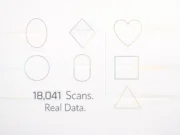
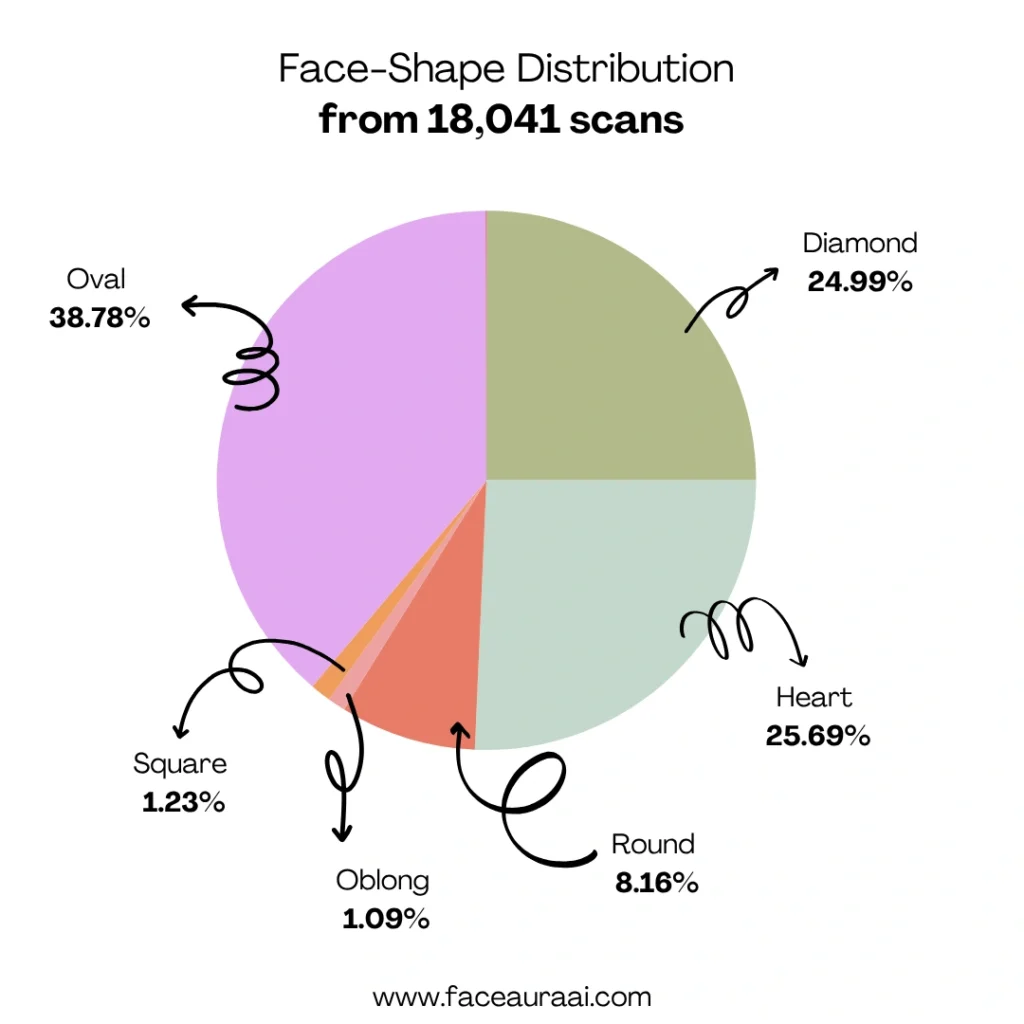
Our Face Shape Detector has now processed 18,041 anonymized scans. We pulled every eligible result from 11 November 2025 to 2 September 2026, and the pattern is clear: oval is still the most common face shape, but it is far less dominant than our first published cohort suggested. heart (25.69%) and Diamond (24.99%) now appear in roughly one in every four scans each — making them essential, not niche, face shapes for haircut, glasses, and styling guidance.
Methodology
The short version: you upload a photo, the AI maps your face geometry, you get your shape. Here’s what that actually means technically.
Every result in this study came from FaceAura AI’s Face Shape Detector — a free, browser-based tool that analyzes face shape from a single uploaded photo in under 30 seconds.
The technology behind each scan
The tool runs on a two-layer system.
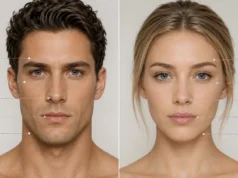
The first layer uses Amazon Rekognition, AWS’s enterprise-grade computer vision API. When you upload a photo, Rekognition’s DetectFaces operation maps up to 100 facial landmarks per image — the inner and outer corners of each eye, the tip and base of the nose, the edges of the mouth, the contour of the jawline, and the forehead boundary. Each landmark comes with precise X/Y coordinate data and a confidence score. This is the same foundational technology used in security, healthcare imaging, and large-scale identity verification.
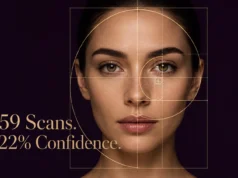
The second layer is a custom geometric classification algorithm built in-house by FaceAura AI’s engineering team. It takes the landmark coordinates from Rekognition and calculates four core facial ratios:
- Forehead width vs. cheekbone width
- Cheekbone width vs. jaw width
- Total face length vs. face width at its widest point
- Jaw angle and chin taper gradient
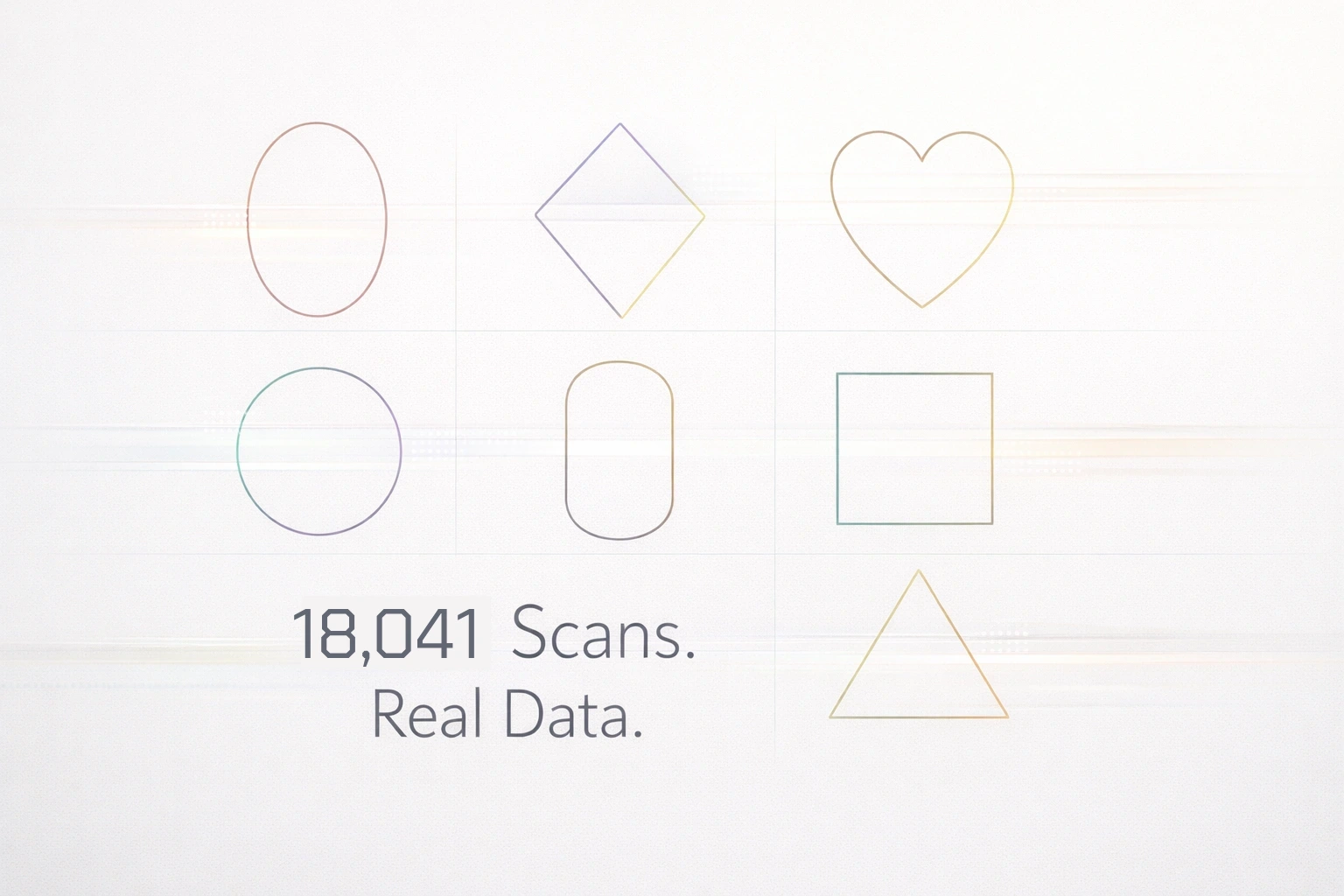
These four ratios are matched against geometric profiles for each of seven face shape categories: Oval, Diamond, Heart, Round, Oblong, Square, and Triangle. The output is the best-fit shape plus a match confidence percentage.
Dataset parameters:
- Total scans analyzed: 18,041
- Period: 11 November 2025 to 2 September 2026
- Input: User-uploaded front-facing photos via the FaceAura AI web tool
- Categories: Oval, Diamond, Heart, Round, Rectangle / Oblong, Square, and Triangle
- Average classification confidence: 93.96%
- Median classification confidence: 95%
- Privacy: No images or biometric data are retained; only anonymized shape classification and confidence data are logged
- User base: People actively searching to determine their face shape online
This is a self-selected dataset, not a population-level random sample. It reflects people who chose to use a face-shape analyzer, rather than the general population. It is still one of the largest publicly reported consumer face-shape scan datasets we publish.
What 18,041 Face Shape Scans Revealed
| Face Shape | Scans | Share |
|---|---|---|
| Oval | 6,997 | 38.78% |
| Heart | 4,635 | 25.69% |
| Diamond | 4,509 | 24.99% |
| Round | 1,473 | 8.16% |
| Square | 222 | 1.23% |
| Oblong | 196 | 1.09% |
| Triangle | 9 | 0.05% |
Oval Is Still Most Common — But Not By the Margin We First Saw
Oval accounted for 38.78% of all scans: 6,997 people out of 18,041. It remains the largest single category, but it no longer represents nearly half of the dataset as it did in our initial 3,803-scan analysis.
That distinction matters. Oval is common because its geometry is comparatively balanced: face length is slightly greater than width, the forehead is often a little wider than the jaw, and the sides read as smooth rather than sharply angular. It is a flexible face shape for styling, but it is not the only common outcome — or an automatic answer when someone is unsure.
A common beauty-media narrative calls oval rare or aspirational. Our expanded data does not support that. Oval is the most common measured result in this scan dataset, but diamond and heart are now almost as important as styling categories.
Diamond and Heart Are Nearly Tied for Second
Heart (25.69%) and Diamond (24.99%) are separated by just 0.70 percentage points. Together, they account for 50.21% of all 18,041 scans — slightly more than half of the complete dataset.
Diamond faces have cheekbones as their widest point, with a narrower forehead and tapered chin. Heart faces generally have more width through the forehead and upper face, followed by a narrower, softer chin. The shapes can look similar in casual photos, but their hair and glasses recommendations differ because the visual balance needed is different.
The practical takeaway is simple: diamond and heart faces are not edge cases. Styling sites that focus mainly on oval, round, and square shapes leave out more than half of the people in this dataset. Hair guides should cover jaw-level width for diamond faces, and lower-face balance, soft fringe, or chin-level weight for heart faces.
Round Is Meaningful, While Rectangle, Square, and Triangle Form the Tail
Round accounts for 8.16% of scans — 1,473 people, or about one in every 12 users. It is an important styling category, but it is not the default shape that many generic haircut guides imply.
The remaining shapes form a small tail of the dataset: Square (1.23%), Oblong (1.09%), and Triangle (0.05%). These are real geometric categories, but they are much less common than beauty infographics often suggest.
Across all 18,041 scans, 97.63% of results are Oval, Heart, Diamond, or Round. That is why a useful face-shape guide needs depth on those four shapes while still giving precise, separate advice to people with rarer Rectangle, Square, and Triangle profiles.
Why People Get Their Own Face Shape Wrong
Here’s the thing — most people who get a “surprising” result from a face shape scan aren’t shocked because the tool is wrong. They’re shocked because the method they were using before was never accurate.
Mirrors distort proportions. A flat bathroom mirror viewed from arm’s length compresses depth perception. The prominent cheekbones of a diamond face don’t register the same way in a casual glance as they do in a photograph analyzed for precise landmark coordinates.
Self-assessment reads soft tissue, not bone. Most people judge face shape by surface appearance — full cheeks, a soft chin — rather than the underlying geometry. Someone with full cheeks and diamond bone structure will call themselves “round” because the fat distribution hides the angles. The AI reads the structure underneath.
Social bias toward certain shapes. Oval is widely labeled the “ideal” in beauty media. People naturally self-report toward aspirational labels. It’s not vanity or wishful thinking — it’s the brain reaching for the nearest familiar category rather than the geometrically correct one.
Face shape changes over time. Age, weight changes, and bone density shifts all affect facial proportions. The shape you identified at 22 may be different at 35. Running an updated scan periodically gives a current measurement, not a memory.
For a complete visual breakdown of every shape, see our guide to different types of face shapes.
What These Patterns Mean for Styling
Oval (38.78%)
Almost any frame, haircut, or neckline works — but “anything goes” often leads to defaulting to safe rather than best. Use that flexibility intentionally. Start with our guide on best glasses for oval face shape to see what truly flatters versus what merely doesn’t clash.
Heart (25.69%)
The goal is to visually balance a wider upper face with a narrower lower face. Cat-eye and wide-temple frames draw attention upward and work with the structure. For hair, chin-length bobs and textured ends add visual weight at the jaw where the face narrows.
Diamond (24.99%)
Your cheekbones are the strongest structural asset. For eyewear, choose narrow, oval, or rimless frames that sit below the cheekbone’s widest point rather than adding width to it. For hair, volume at the jawline — waves, a lob cut, side-swept styles — balances the narrow lower face. Avoid center-parted flat styles that emphasize the width differential.
Round (8.16%)
Vertical length is the styling objective. Tall hairstyles, angular glasses frames, and V-necklines all create the illusion of a longer, more defined face. Avoid round frames, wide horizontal hairlines, and styles that add width. Full guide: best glasses for round face — men and women.
For the less common shapes — oblong, square, and triangle — here’s the quick reference:
| Shape | Styling Goal | Eyewear | Hair |
|---|---|---|---|
| Oblong | Add width, not length | Wide horizontal frames | Layers with volume at sides |
| Square | Soften jaw angles | Round or oval frames | Soft layers at the chin |
| Triangle | Balance a narrow forehead | Cat-eye or browline frames | Volume at the crown |
Full hairstyle breakdown: hairstyles for square face shape women.
Try the Detector Yourself
The scan takes under 30 seconds. Upload a clear, front-facing photo with your hair pulled back, and the tool returns a face-shape classification, a confidence score, and styling notes matched to your result.
18,041 people have already completed an eligible FaceAura AI face-shape scan. Your result is a landmark-based measurement, not a mirror guess.
→ Run your face shape scan now
Data source: FaceAura AI Face Shape Detector scan log, N=18,041 eligible anonymized scans, 11 November 2025–2 September 2026. Average classification confidence: 93.96%; median confidence: 95%. Facial landmarks detected via Amazon Rekognition and classified using FaceAura AI’s geometric face-shape model. No images or personal data are retained.
Looking for haircut guidance instead of data analysis? Explore men’s hairstyles by face shape or women’s hairstyles by face shape.