


Getting a haircut should feel exciting — not like a gamble. Most people walk into a salon without knowing their face shape — and walk out disappointed. The right haircut isn’t about trends; it’s about matching your facial proportions. Here’s the truth: the right haircut isn’t about trends, it’s about your face shape. When your cut balances your facial proportions, you look sharper, younger, and more put-together — every single day.
This guide covers everything: how to identify your face shape at home, which haircuts work best for each shape (for both men and women), what to avoid, and how to use free AI tools to preview styles before you commit. Whether you’re heading to a Naturals salon in Chennai or a local barber in Pune, you’ll walk in knowing exactly what to ask for.
Quick answer: Oval faces suit almost any cut; round faces need length (lob, long layers); square faces need soft layers; heart faces suit chin-length bobs; diamond faces suit side-swept fringes; oblong faces need width (blunt bob); triangle faces need volume on top. Use the free FaceAura AI Face Shape Detector to confirm your shape in seconds.
How to Determine Your Face Shape at Home
Your face shape is the single most important factor when choosing a haircut — and you can figure it out in under five minutes.
Here’s the catch: most people guess wrong. They think they have an oval face when they actually have a round or oblong one. Let’s fix that.
The Mirror Test (No Tools Needed)
1. Pull all your hair back tightly — use a headband or clips. 2. Stand in front of a well-lit mirror. 3. Trace the outline of your face on the mirror with a dry-erase marker or lipstick. 4. Step back and look at the shape you’ve drawn.
Measure for Accuracy
For a more precise result, grab a soft measuring tape and note four key measurements:
Forehead width — across the widest point, temple to temple
Cheekbone width — across the widest point of your cheeks
Jawline width — from one side of your jaw to the other
Face length — from your hairline to the tip of your chin
Compare these numbers to identify your shape (see the next section).
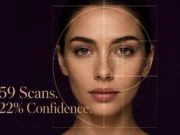
Use an Faceauraai AI App for Instant Detection
Pro tip: Take your selfie in natural light with your hair pulled back for the most accurate AI reading.
The 7 Face Shapes and the Best Haircuts for Each
Each of the seven main face shapes has specific haircut principles that balance proportions and enhance your best features.
Oval Face
Oval is considered the most versatile face shape — almost every haircut style suits it. Your forehead and jaw are roughly equal in width, with the face gently narrowing at both ends.
Best cuts: Long layers, blunt bob, pixie cut, curtain bangs, undercut, quiff
Avoid: Extremely voluminous styles that add width at the sides
Round Face
Round faces have similar width and length, with soft, curved edges. The goal is to add visual length and reduce width. Round faces benefit from haircuts that add height and length, such as long layers and lobs.
Best cuts: Long layers, lob (long bob), high fade with volume on top, side-swept fringe
Avoid: Blunt bobs at chin level, centre-parted styles with no height
Square Face
A square face has a strong, wide jawline roughly equal to the forehead width. Square faces are best complemented by soft, layered styles that help soften angular features.
Best cuts: Soft waves, long layers, side-parted styles, tapered fade
Avoid: Blunt cuts at jaw level, boxy styles that mirror the jaw shape
Heart Face
Heart-shaped faces have a wider forehead and narrower chin. Heart-shaped faces should opt for styles that add volume around the jaw to create balance.
Best cuts: Chin-length bob, lob with waves, side-swept bangs, textured layers
Avoid: Very short styles that emphasise the forehead, heavy top volume
Diamond Face
Diamond faces are narrow at the forehead and chin, with wide cheekbones. Diamond face shapes benefit from layers or fringes that fall around the cheekbones to soften angular features .
Best cuts: Side-swept fringe, chin-length bob, textured layers, curtain bangs
Avoid: Styles that add width at the cheekbones, slicked-back looks
Oblong (Long) Face
Oblong faces are longer than they are wide, with a straight cheek line. Oblong faces should aim for cuts that add width and reduce the appearance of length, such as layered cuts and side-swept bangs.
Best cuts: Blunt bob, side-swept bangs, waves with volume at the sides
Avoid: Long straight styles with no volume, centre parts that elongate the face
Triangle Face
Triangle faces have a wider jaw and narrower forehead. The goal is to add volume at the top and reduce emphasis on the jaw.
Best cuts: Voluminous top layers, side-swept fringe, pixie with volume at the crown
Avoid: Styles that add bulk at the jaw, blunt cuts at chin level
Tailored Advice: Men’s Haircuts vs Women’s Haircuts by Face Shape
Most guides focus on one gender — here’s a side-by-side breakdown so both men and women get specific, actionable recommendations.
Quick Reference: Face Shape vs Best Haircut
| Face Shape | Best Men’s Cut | Best Women’s Cut | Avoid |
|---|---|---|---|
| Oval | Quiff, undercut, crew cut | Long layers, pixie, any style | Extreme volume at sides |
| Round | High fade + volume, pompadour | Lob, long layers, side fringe | Chin-length blunt bob |
| Square | Tapered fade, textured crop | Soft waves, side part lob | Boxy jaw-level cuts |
| Heart | Side-swept fringe, textured top | Chin bob, wavy lob | Heavy top volume |
| Diamond | Curtain bangs, side part | Side fringe, chin bob | Wide cheekbone styles |
| Oblong | Textured fringe, side part | Blunt bob, side-swept bangs | Long straight centre-part |
| Triangle | Volume at crown, quiff | Voluminous layers, pixie | Jaw-level bulk |
Men’s Specific Styles
For men in India, popular cuts like the undercut, quiff, and pompadour work brilliantly for oval and round faces. The crew cut suits square and oval faces. If you have a round face, ask your barber for a high fade with volume on top — it creates the illusion of length.
Women’s Specific Styles
For women, the lob (long bob) is one of the most universally flattering cuts because it works across oval, round, heart, and diamond shapes. Curtain bangs have exploded in popularity across Indian salons like Enrich and Naturals — they soften square and diamond faces beautifully.
Hair Texture, Density, and Lifestyle: The Factors Most Guides Ignore
Your face shape tells you what silhouette to aim for — but your hair texture and lifestyle determine which specific cut will actually work for you.
As celebrity hairstylist George Papanikolas of Matrix puts it: “There isn’t one definitive way to go — rather, there are a few flattering and standard tips to accentuate some features.”
By Hair Texture
- Straight hair: Shows structure clearly — great for blunt bobs and precise fades
- Wavy hair: Adds natural volume — works well with lobs and layered cuts
- Curly hair: Shrinks when dry — ask your stylist to cut dry, not wet
- Coily hair: Adds significant volume — ideal for shapes needing width (oblong, triangle)
By Hair Density
- Thin hair: Avoid heavy blunt cuts that expose the scalp; opt for layers that create movement
- Thick hair: Can handle bold cuts like undercuts and blunt bobs; thinning shears help manage bulk
By Lifestyle
- Low maintenance: Go for a wash-and-go cut — tapered fades for men, lobs for women
- High styling: You can pull off more complex cuts like textured quiffs or layered pixies
Important: A haircut that looks great in a salon photo but requires 30 minutes of styling every morning isn’t practical for most people. Be honest with your stylist about your daily routine.
Common Myths About Choosing a Haircut for Your Face Shape
Several popular beliefs about face shape and haircuts are simply wrong — and following them leads to bad decisions.
Myth 1: “Oval faces can wear any haircut”
Partially true, but misleading. While oval faces are the most versatile, extremely voluminous styles or very heavy blunt cuts can still look unflattering.
Myth 2: “Bangs don’t suit round faces”
Actually false. Side-swept bangs and curtain bangs work well on round faces because they create diagonal lines that add visual length. What doesn’t work is a heavy, straight-across fringe that cuts the face horizontally and makes it appear wider.
Myth 3: “You need to follow face shape rules strictly”
Not quite. As InStyle’s celebrity hairstylist Nast points out: “Face shape might not be as critical if the individual has other dominant features such as a very long neck or particularly prominent eyes, which they might prefer to highlight or minimize.” Face shape is a starting point, not a rulebook.
Modern Trends: Korean Haircuts, the 3-2-1 Rule, and Age-Defying Styles
Trending haircut styles in 2025-2026 are increasingly face-shape-friendly — here’s how to apply them smartly.
What Is a Korean Haircut?
A Korean haircut (also called a K-style cut) typically features soft, face-framing layers, a wispy fringe, and a rounded silhouette. It’s particularly popular among Indian men and women in cities like Mumbai and Bengaluru. Korean cuts work best on oval, heart, and round faces because the soft layers add movement without bulk.
What Is the 3-2-1 Rule for Haircuts?
The 3-2-1 rule is a proportion guideline used by barbers: 3 parts hair on top, 2 parts on the sides, 1 part fade at the bottom. It’s most commonly applied to men’s cuts and works especially well for round and oblong faces because it creates a balanced, elongated silhouette.
Haircuts That Make You Look Younger
Certain cuts consistently shave years off your appearance:
- Curtain bangs — soften the forehead and frame the eyes
- Long layers — add movement and reduce the appearance of fine lines
- Textured crops (men) — add youthful energy without looking overdone
- Lob with waves — one of the most age-defying women’s cuts across all face shapes
2026 hair trends are unusually face-shape-friendly, with dominant styles focusing on softer textures and layered movement that work well across multiple face shapes.
How to Use AI and Apps to Preview Your Haircut Before Committing
AI-powered hairstyle preview tools let you test cuts virtually before sitting in the salon chair — a game-changer for avoiding regret.
Here’s how to use them effectively:
- Take a clean selfie — good lighting, hair pulled back, neutral expression
- Upload to an AI tool — FaceShapeAI detects your shape instantly
- Browse recommended styles — filter by gender, hair type, and length
- Screenshot your favourites — save 2-3 options to show your stylist
- Book your appointment — walk in with a reference image, not just a vague idea
Top Free Tools Available in India
Faceauraai.com
Can ChatGPT suggest a haircut? Yes — describe your face shape, hair texture, and lifestyle to ChatGPT and it’ll give you specific recommendations. It won’t show you a visual preview, but it’s surprisingly useful for narrowing down options before using a visual tool.
Pro tip: Screenshot your chosen style and send it to your stylist on WhatsApp before your appointment. Salons like Enrich and Naturals across India appreciate clients who come prepared — it saves time and ensures you get exactly what you want.
Frequently Asked Questions
What haircut is best for your face shape?
The best haircut depends on your specific face shape — oval faces suit almost any style, round faces need length and height, square faces benefit from soft layers, and heart faces look great with chin-length bobs. Start by identifying your face shape using the mirror test or a free AI tool, then match your shape to the recommendations in this guide. Hair texture and lifestyle also matter.
What is the 3-2-1 rule for haircuts?
The 3-2-1 rule is a barber’s proportion guideline: 3 parts hair on top, 2 parts on the sides, and 1 part fade at the bottom. It’s most commonly used for men’s cuts and creates a balanced, elongated silhouette. It works particularly well for round and oblong face shapes because it adds visual height and reduces the appearance of width.
Do bangs suit every face shape?
Not all bang styles suit every face shape, but there’s a bang type for almost everyone. Curtain bangs and side-swept bangs work across most shapes including round, square, and diamond faces. Heavy, straight-across fringes can make round faces appear wider. Heart and oval faces can pull off almost any fringe style. The key is choosing the right bang shape, not avoiding bangs altogether.
How to tell if a haircut will suit you?
The most reliable way is to use a virtual try-on app like FaceShapeAI or therighthairstyles.com before committing. You can also: identify your face shape first, look at celebrities or influencers with the same face shape wearing that cut, bring a reference photo to your stylist, and ask for their honest professional opinion. A good stylist will tell you if a cut won’t work for your features.
What haircuts make you look younger?
Curtain bangs, long layers, textured crops (for men), and lobs with soft waves consistently make people look younger. These styles add movement, soften facial lines, and frame the face without looking overdone. Avoid very blunt, heavy cuts that can look harsh. For Indian women, a layered lob or curtain bangs at a salon like Naturals or Enrich is a great starting point.
How long until a haircut looks better?
Most haircuts settle and look their best within 1-2 weeks as the initial bluntness softens. If you’ve had a major cut, give it 2-4 weeks before judging. Hair grows approximately 1.25 cm per month, so minor adjustments become possible quickly. If a cut still doesn’t feel right after 3 weeks, book a follow-up with your stylist for a small correction — don’t wait months.
What is a Korean haircut?
A Korean haircut (K-style cut) features soft face-framing layers, a wispy fringe, and a rounded silhouette that flatters most face shapes. It’s hugely popular in Indian cities like Mumbai and Bengaluru. Korean cuts work best on oval, heart, and round faces. For men, the K-style often includes a textured top with a soft side part. Ask your stylist for ‘Korean-inspired layers’ to get the look.
Conclusion
Choosing the right haircut doesn’t have to be stressful. Here’s the simple process: identify your face shape (mirror test or AI app) → match it to proven haircut principles → factor in your hair texture and lifestyle → preview with a free tool → walk into your salon with a reference photo. That’s it.
Whether you’re a man looking for the perfect fade in Delhi or a woman wanting a lob that flatters your round face in Hyderabad, the formula is the same. Face shape is your starting point — not a rigid rulebook. As the experts remind us, confidence in your choice matters just as much as the cut itself. Now you have everything you need to make that decision with clarity.